
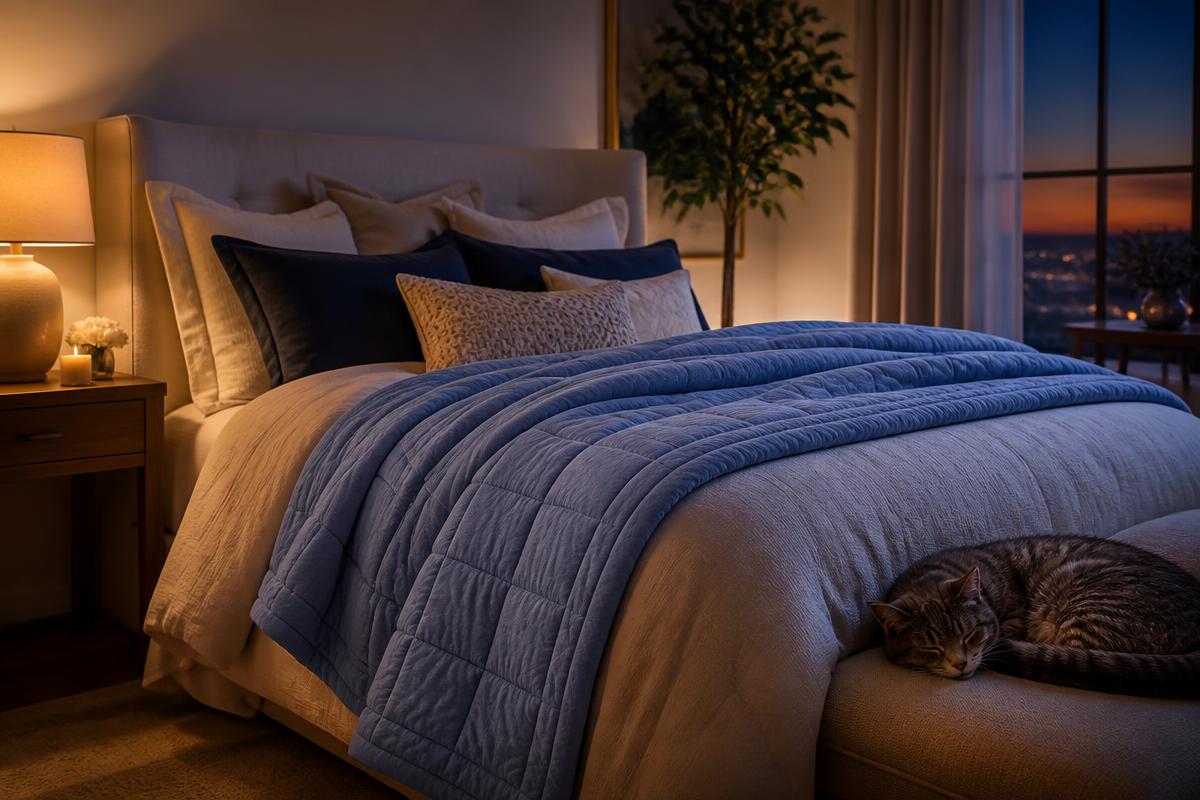
Weighted blankets have moved from therapy rooms to bedside tables for a reason. Their gentle, even pressure can help a busy nervous system slow down, making it easier to fall asleep and stay asleep. The idea is simple: a blanket filled with tiny glass or plastic beads adds weight that hugs the body, mimicking the feeling of being held.
How weighted blankets work
The pressure from a weighted blanket is often called deep touch pressure (DTP), the same kind of steady, firm contact you feel during a hug or massage. That sensation can encourage the body to shift from alert mode into rest mode. Many people notice their breathing slows, their muscles loosen, and racing thoughts quiet down.
Researchers believe this may happen through the parasympathetic nervous system — the branch that handles rest and digestion. At the same time, weighted blankets may reduce levels of cortisol, the stress hormone, and support melatonin, the hormone that tells the body it is time to sleep.
Weighted blanket benefits for sleep
Faster sleep onset
The gentle pressure can help the body relax, making it easier to drift off instead of tossing.
Fewer nighttime wake-ups
Many users report fewer interruptions and longer stretches of rest once settled.
Calm without medication
A non-drug option for people who want a natural way to wind down before bed.
Quieter mind
The steady sensation can interrupt the loop of worried or racing thoughts.
Weighted blanket benefits for anxiety
Anxiety often shows up in the body as a tight chest, restless legs, or a mind that will not stop planning. A weighted blanket can give the nervous system something else to pay attention to: consistent, safe pressure. That input can help ground you in the present moment and lower the intensity of anxious feelings.
Occupational therapists have used weighted products for years to help people with sensory processing differences, autism, and ADHD feel more secure. Today, many adults use them at home to manage everyday stress, panic, and overstimulation.
Who weighted blankets help most
- People who take a long time to fall asleep
- Adults with anxiety, racing thoughts, or high stress
- Anyone who wakes up frequently during the night
- People with ADHD or sensory processing sensitivities
- Pet parents who want their own calming space
How to choose the right weighted blanket
The most common guideline is to pick a blanket that is about 10% of your body weight. If you weigh 150 pounds, a 15-pound blanket is a typical starting point. If you are between sizes, most people prefer the lighter option for the first blanket.
Quick weight guide
- 100–120 lbs → 10–12 lb blanket
- 120–150 lbs → 12–15 lb blanket
- 150–180 lbs → 15–18 lb blanket
- 180–220 lbs → 18–20 lb blanket
Look for a blanket with a removable, washable cover. Weight should be evenly distributed in small pockets so it does not bunch up or fall to the edges. A soft, breathable outer layer matters too — you want calm, not overheating.
Shop the guide
Moonbeam Weighted Blanket
Three weights, dreamy-soft fabric, and a washable cover. Built for the calm nights you have been missing.
A note on safety
Weighted blankets are not recommended for infants, young children, or anyone who cannot easily lift the blanket off their body on their own. If you have a medical condition, breathing difficulty, or circulation concerns, check with a healthcare provider before use.